Global Import Data for Smarter Business Decisions
In today’s interconnected economy, guesswork is no longer a viable strategy for growth. Whether you’re an exporter scouting new markets, an importer vetting suppliers, or an analyst mapping industry trends, one asset separates the businesses that scale from the ones that stall: global import data.
Access to accurate, real-time trade records turns uncertainty into strategy. It shows you who is buying what, from where, at what volume, and at what price — the exact intelligence you need to make confident, profitable decisions.
What Is Global Import Data?
Global import data refers to detailed shipment-level records of goods entering a country, typically sourced from customs authorities and port filings. Each record can include:
- Buyer and supplier names
- Product descriptions and HS codes
- Shipment quantity and value
- Origin and destination ports
- Date of shipment
- Mode of transport
When aggregated across countries and industries, this data becomes a powerful lens into global trade flows — and a foundation for real business intelligence.
Why Import Data Matters for Modern Businesses
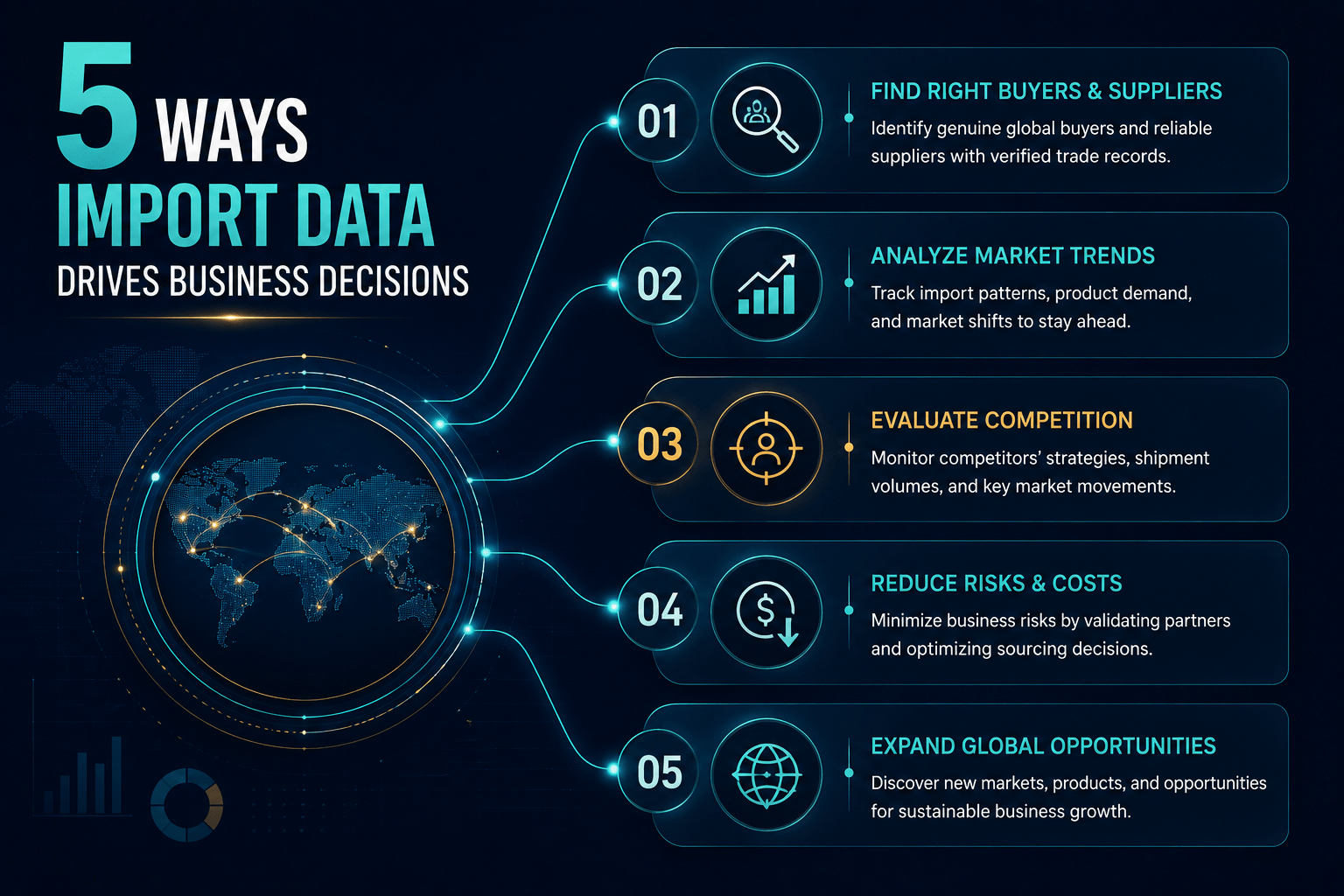
1. Identify Verified Buyers and Suppliers
Instead of cold-calling leads from directories, import data lets you see who is actively importing your product category right now. That means every lead you pursue is already proven to buy — not just a name on a list.
2. Track Competitor Activity
Curious what volumes your competitors are shipping, or which new markets they’ve entered? Shipment records reveal competitor trade patterns, giving you a benchmark to plan against.
3. Validate New Markets Before You Enter Them
Expanding into a new country is expensive and risky. Trade data lets you study import volumes, seasonal demand, and pricing trends in a target market before committing resources — reducing your risk of a costly misstep.
4. Strengthen Supplier Due Diligence
Import records help importers verify a supplier’s shipping history, consistency, and existing buyer relationships — an essential check before signing a contract.
5. Support Data-Driven Pricing and Negotiation
Knowing the price ranges competitors are securing for similar shipments gives your procurement or sales team real leverage at the negotiating table.
Who Benefits Most from Import Data?
- Exporters looking to identify high-potential buyers in new geographies
- Importers seeking reliable, competitively priced suppliers
- Market research and BI teams building trade trend reports
- Trade finance and logistics providers assessing client risk and volume
- Government and policy analysts studying import-export patterns
Turning Trade Data into Business Intelligence
Raw shipment records are only valuable when they’re structured, searchable, and easy to act on. That’s where a purpose-built trade intelligence platform comes in — transforming millions of customs filings into buyer-supplier profiles, trend dashboards, and exportable reports your team can use immediately.
At DataVault Insights, we specialize in exactly this — delivering accurate, up-to-date global import data across 60+ countries spanning Asia, Africa, the Americas, and Europe. With over 50 million shipment records and a decade of historical data, businesses use our platform to uncover verified buyers and suppliers, benchmark competitors, and make faster, evidence-based decisions.
Final Thoughts
In global trade, information is leverage. The businesses winning market share today aren’t the ones with the biggest budgets — they’re the ones making decisions backed by real shipment-level evidence. Global import data isn’t just a research tool; it’s a competitive advantage.
If you’re ready to move from guesswork to grounded strategy, explore how comprehensive trade intelligence can support your next move at DataVault Insights.